





In recent years, Iran has emerged as one of the leading centers for health tourism in the Middle East and even on a global scale. Among the various branches of medicine, infertility treatment holds a special place, and annually, thousands of couples from around the world choose this country to realize their dream of having a child, despite regional political conditions. This is no coincidence; rather, it is the result of a combination of intelligent, scientific, and economic factors that have distinguished Iran in this field.
Significant Advancements in Reproductive Science and Technology
One of the primary reasons for attracting patients is the high scientific and technological level of Iranian treatment centers. The country has made remarkable strides in biotechnology and reproductive medicine. Many specialist physicians and embryologists in Iran have completed their specialized education at top universities in Europe and America, bringing international experience back with them. Infertility treatment centers in cities like Tehran, Shiraz, and Isfahan are equipped with state-of-the-art laboratories and advanced microscopic and IVF devices. Advanced techniques such as In Vitro Fertilization (IVF), Intracytoplasmic Sperm Injection (ICSI), Preimplantation Genetic Diagnosis (PGD), and egg donation are performed in these clinics with very high standards.
Economic Efficiency and Reasonable Costs
The cost of infertility treatment in many Western countries and even some neighboring nations is exorbitantly high and often beyond the financial reach of many couples. In contrast, while offering world-class quality services, Iran provides treatments at a much lower and more cost-effective rate. This price difference can sometimes be as low as one-third or even less than the costs of treatment in Europe and America. This allows couples to undergo multiple treatment cycles if necessary, which significantly increases the chances of success. Lower costs for accommodation, nutrition, and transportation are additional advantages that reduce the financial burden of medical travel for foreign patients.
High Success Rates and Statistical Transparency
Infertility centers in Iran, relying on the expertise of physicians and the utilization of up-to-date scientific protocols, have recorded high success rates in treating various types of infertility. Whether dealing with male or female infertility, personalized treatment approaches are designed for each patient. The transparency in presenting success statistics and the continuous follow-up of patients have built the trust of foreign couples. Many patients who have traveled to Iran after years of unsuccessful attempts in their own countries have been able to achieve favorable results.
Clear Legal Framework and Government Support
Iran has clear and codified laws regarding assisted reproductive technologies and embryo donation. These laws are drafted considering ethical and Sharia principles, guaranteeing the legal security of parents and children born through these methods. Government support for the medical sector and research has minimized administrative obstacles for foreign patients, allowing the treatment process to proceed with greater speed and ease.
Culture of Hospitality and Cultural Similarities Iran,
as a country with thousands of years of civilization, has always hosted guests from all over the world. The culture of Iranian hospitality and the warm behavior of medical staff ensure that patients are treated in a calm environment, free from the stress of treatment. For Muslim patients from neighboring countries, cultural and religious similarities are a significant advantage, as they feel more comfortable within the treatment environment.
The medical equipment industry in Iran,
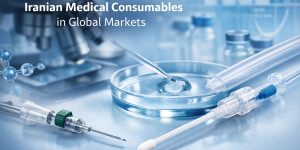
particularly in the field of infertility and Assisted Reproductive Technology (ART), has made remarkable strides . Iranian scientists and specialists, relying on indigenous knowledge and domestic engineering capabilities, have succeeded in producing many vital pieces of equipment domestically that previously had a heavy dependence on imports.
Puncture Needles:
These needles, used for egg retrieval (OPU), are of very high sensitivity. Iranian manufacturers, adhering to precise standards, produce high-quality needles with various gauges (usually 16 to 18 gauge) that help reduce patient pain and increase physician accuracy. These products are now used in many treatment centers across the country.
Transfer Catheters:
Embryo transfer catheters are one of the most sensitive tools in the IVF process. The production of these catheters in Iran is carried out using high-quality raw materials and advanced technology to ensure the necessary softness and flexibility to pass through the cervix without damaging the endometrium. This directly impacts increasing the pregnancy success rate.
These achievements demonstrate the scientific and industrial authority of the Islamic Republic of Iran, which has been able to achieve self-sufficiency in complex medical fields by relying on domestic expert power, ensuring the health of Iranian families.
Competitive advantages of these products compared to foreign brands and their usage rate
Iranian manufacturers in the field of infertility equipment have been able to bring products to the market that compete with foreign samples in terms of quality by relying on local knowledge and academic research.
Competitive Advantages of Iranian Products:
- Suitable and Cost-Effective Price:Given currency fluctuations and the high costs of imports, Iranian products have a much lower price compared to foreign brands. This reduces treatment costs for infertile couples and makes access to IVF and ICSI treatments possible for a larger segment of society.
- After-Sales Service and Rapid Support: Domestic companies, due to their presence in the country, are able to provide immediate support, train medical staff, and quickly supply parts or products, which is often challenging for foreign brands due to import bureaucracy and customs issues.
- Compatibility with the Needs of Iranian Physicians: Iranian designers and engineers have developed this equipment in close collaboration with the country’s infertility specialists. This interaction has led to the optimization of products based on the anatomy of Iranian patients and common treatment protocols in the country.
- Resistance to Sanctions: The production of these items inside the country guarantees market stability. While sanctions can disrupt the import of foreign brands, Iranian products are always accessible.
Comparison with Foreign Brands:
• Increased Market Share of Iranian Products:
Many government and private hospitals and infertility treatment centers have prioritized the use of domestic brands due to the desirable quality and more affordable price of Iranian products. Statistics show that currently, more than 70 to 80 percent of the country’s treatment centers’ needs for consumables such as needles and catheters are met by domestic manufacturers.
• Equal Quality:
Clinical trials and feedback from specialist physicians indicate that Iranian products perform very closely to renowned global brands in terms of sterility, needle sharpness, and catheter softness, and in some cases even better than inexpensive foreign samples.
Iranian products have become the first choice for infertility treatment centers in Iran due to government support, reduced treatment costs, and guaranteed quality. This is a great success for the country’s medical industry.
Conclusion
In summary, the combination of medical expertise, advanced technology, reasonable costs, supportive laws, and a welcoming cultural environment has turned Iran into a major hub for infertility treatment. Despite international challenges, relying on indigenous knowledge and the capabilities of its specialists, the country continues to welcome infertile couples with open arms, gifting them hope.